How to Form a Tribe in Polylithic
People are the point. Happiness is the lock. Injuries are the fine.
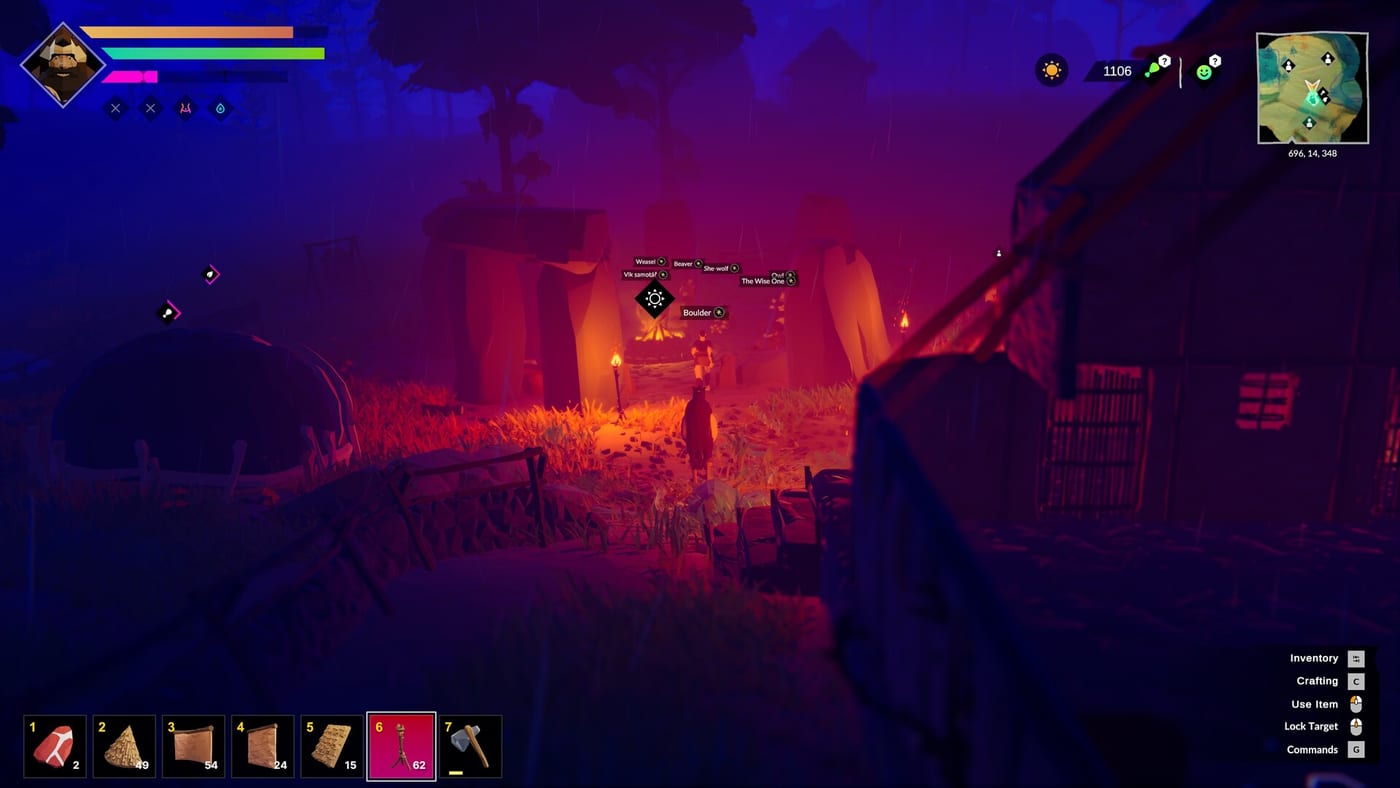
Polylithic is willing to let you finish a day alone. It is not interested in letting you finish the fantasy alone. The 1.0 pitch is a village that works, grows elders, and walks toward farming while enemy tribes disagree. Forming that village is less “press recruit” and more “stop feeding your only friend to a bison.” This guide is the social loop. For the ugly AI details, keep villagers open. For walls and beds, use settlement.
You need a camp that can feed two mouths before you need a census. If the fire is still theoretical, return to getting started. A recruit who arrives to an empty pot is just another hunger bar with opinions.
Happiness is the door
Older builds already used a happiness floor around the mid-thirties before an elder would allow another person. Injuries slam that number. Waiting passively raises it. Launch-week players still describe the same cruel joke: you win a hunt, someone gets clipped, and the village is closed for applications. There is no parade. There is a timer and a lot of staring at the fire.
Protect happiness like it is a resource node. Do not take the whole population on follow. Do not test bison. Do not use people as mobile cover. If a fight is optional, it is optional. The hunting guide exists so you can feed the camp without paying morale tax.
What the first recruit is for
The first extra person is a backpack and a berry vacuum. They pick up arrows you cannot see in bushes. They carry replacement spears. They are not a raid squad. Assign simple work if the menu allows it, then watch whether they actually do it. If they sit in the campfire with a rock, unstuck them and do the job yourself. That is not you failing the tribe fantasy. That is 1.0.
Unlocking better tasks often wants repetition plus time spent traveling together. That is a long tail. Do not delay the hut because you are waiting for a perfect labor tree. A hut with a bed saves the imperfect labor tree.
Elders and the long game
Elders are how the game sells civilization. They stay, they unlock work, they make the Neolithic half feel like a direction. They also eat. Promote or age people when food is boringly stable. If every roast is a crisis, you do not have a government. You have a picnic.
Enemy tribes in 1.0 mean your growing camp is visible. Scout before you plant a second cluster of huts on a border you have not walked. A proud expansion that loses two people is a happiness crater and a closed elder desk.
Co-op tribes are a different species
Friends are not AI. They will also ignore your gather plan. Appoint roles: one host, one stalk runner, one builder. Read how to play co-op and multiplayer before you assume four humans will spontaneously invent agriculture.
When to stop recruiting
Stop when food is tight, when happiness is already limping, or when you cannot name a job for the new person. A larger tribe is not a higher score. It is more pathing through your campfire. Use the survival checklist to confirm the camp is real, then add people like you add grindstones: after the last one proved it can exist without drama.
Forming a tribe in this game is an act of stubborn optimism. Build the hut, guard the mood, and let the population grow only as fast as the stew.
Frequently Asked Questions
Quick answers to the most common questions.
How do I get more tribe members in Polylithic?
Keep happiness above the elder threshold and stop injuring people on pride hunts. Details sit in villagers.
Why did happiness drop after a win?
Someone got hit. Winning does not refund morale. Hunt smaller game or leave followers at home.
Should I recruit before I have a hut?
No. A bed and a fire first. Settlement is the gate that makes extra people saveable.
Do enemy tribes block recruiting?
They block it indirectly by injuring your people. Scout, do not parade, and keep the biomes map in mind.