Polylithic Map and Biomes
Pretty terrain with opinions, plus the herds that share those opinions.
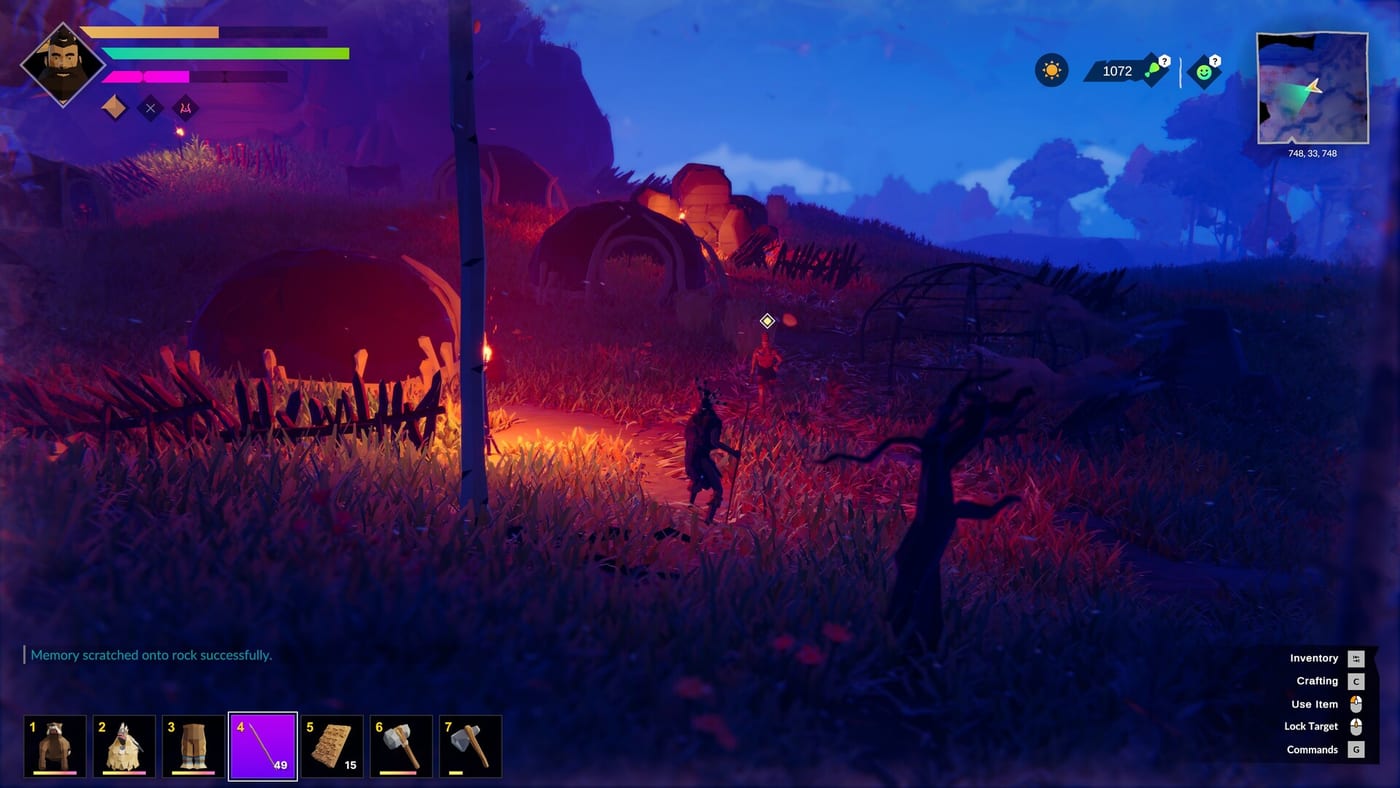
The Polylithic world is sold as vibrant, colorful, and indifferent. That is accurate. Forests look like grocery aisles until a bear is already in the shot. Plains look like freedom until a bison pack agroes as a committee. Snow looks like a postcard until you realize you walked away from the hut without a bed. This page is how to read the map key M opens, and how to pick a walk that feeds the camp instead of ending it.
If you do not have a save, you do not have a scouting hobby. Place the hut bed first via settlement and getting started.
Forests
Forests are the starter pantry. Twigs, roots, nuts on orange-leaf trees, the occasional chicken, and the soundtrack of something larger you should not investigate. Stay on edges when you are under-geared so you can see charges coming. Deep woods are for people with a bow and a reason.
Forests hide corpses and arrows. After a fight, sweep with Alt as described in controls. Followers are actually good at vacuuming the floor here. Take them for chores, not for the surprise bear.
Plains
Plains grow stalk, which is the string economy. They also host caribou, bison, and the mammoth family photo. Walk plains for stalk and for planned hunts. Do not walk plains to “see what happens.” What happens is a herd.
If you need stalk, hug the open ground near camp, grab plants, and leave. If you need a mammoth for a quest, treat it as an expedition with a save behind you, not as a detour.
Rivers and rapids
Rivers give clay, ochre, and fish once a pole exists. They also eat villagers and tames. Build stations on the bank, not in the current. The store page’s joke about rapids not caring is a hint. Taming and villagers both get worse in water. Fish anyway. Launch players called fish strong, and a river will not pack-agro you.
Snow hills
Snow is a later postcard. It reads cold even when the UI is polite. Scout it after the camp can eat without the next berry bush. Use it for variety and for story beats that point uphill, not for your first night flex. If a quest marker sits in snow, pack food from cooking and a weapon you can replace.
Marks, outposts, and other camps
1.0 players mention odd map marks, including crossbones they did not place. Treat unknown symbols as “walk there on purpose later,” not as a collectible. Outposts and enemy tribes are real now. If a mark is a camp, scout with one or two bodies, not the census. How to complete the story covers assignment stalls. How to form a tribe covers why a raid is a happiness tax.
Sandbox worlds generate more of everything. The advice does not change. Forests feed, plains tax your discipline, rivers feed if you can fish, snow waits. Open the map, pick one job, and walk home before the lighting gets so pretty you forget the bison.
One walk, one job
Do not tour every biome because the map looks unfinished. Pick the missing item first, then pick the habitat. Clay means river. Stalk means plains edge. Flint and wood mean forest edge, not the dark middle. Snow is a later postcard, not a grocery run. If friends are online, split habitats instead of stacking ten people on the same berry bush. See how to play coop and the gathering planner. Come home when the bag matches the job, even if a prettier ridge is still fogged.
Frequently Asked Questions
Quick answers to the most common questions.
How do I open the Polylithic map?
Press M on keyboard, or find Map in the pause cluster on a controller.
Where should I gather stalk?
Open plains near camp. Deep forest is worse for stalk and better at hiding bears.
Is fishing worth it?
Yes once you have a pole. It is safer protein than bison and pairs with cooking.
What do unknown map marks mean?
Often outposts, corpses, or 1.0 leftovers. Scout later with a save behind you, not during a berry run.